Vitamin C - why you really need it to slow down skin aging!
Disclaimer: this website does not provide medical advice. Articles are for informational purposes only and should not be used as a substitute for professional medical advice, diagnosis or treatment. Always seek the advice of your physician or other qualified healthcare provider with any questions you may have regarding a medical condition or treatment, and never disregard professional medical advice or delay in seeking it because of something you have read on this website.
Introduction
There are a lot of claims about the benefits of Vitamin C for your skin, such as improving collagen production, fading dark spots and evening out skin tone – but are they true? And even if these claims are true, you have a lot of competing demands on what to include in your skincare routine – so why should you consider including Vitamin C?
In this article, we walk through the benefits, the scientific evidence, the user experiences, and we let you know whether we think daily use of Vitamin C serum is worth your while.
The science behind topical Vitamin C
According to Harvard Health, the application of Vitamin C serum on your skin has been scientifically proven to slow skin aging, prevent damage from the sun and improve the appearance of fine lines, dark spots and acne scars. Vitamin C is effective because it contains antioxidants, which combat the free radicals that damage your skin.
In the 2008 research study, “A topical antioxidant solution containing vitamins C and E stabilized by ferulic acid provides protection for human skin against damage caused by ultraviolet irradiation”, they found that using Vitamin C in conjunction with Vitamin E can protect the skin from sun damage.
In the research review carried out in 2017, “The Roles of Vitamin C in Skin Health”, they said “Normal skin contains high concentrations of Vitamin C” and that “several reports have indicated that Vitamin C levels are lower in aged or photodamaged skin”. The review talks about the important role of Vitamin C in promoting the formation of collagen and its potency as an antioxidant. It also notes that it inhibits melanin production, helping with age spots and hyperpigmentation, and that it provides protection from aging, including loss of skin elasticity, and helps with skin regeneration.
What to look for when purchasing Vitamin C serum
Most affordable products use Vitamin C in the form of Sodium Ascorbyl Phosphate. According to the anti-aging scientist, Henry Tianus, L-Ascorbic Acid is the purest form of Vitamin C with 99.99% Ascorbic Acid content, whereas Sodium Ascorbyl Phosphate contains around 45% to 50% Ascorbic Acid.
He prefers to use L-Ascorbic Acid in his products, but notes that “at a 5% concentration, Sodium Ascorbyl Phosphate has been shown to improve the appearance of acne-prone skin.”
From what we can see in the user reviews, while products using L-Ascorbic Acid may be better, people are getting great results from products using Sodium Ascorbyl Phosphate too.
Generally speaking the serum comes in tinted glass bottles, to protect the Vitamin C, and often contains other ingredients such as Hyaluronic Acid and Vitamin E.
Benefits of topical Vitamin C
-
Reduces wrinkles and fine lines, supports collagen production and helps protect against sun damage.
-
Fades dark spots and hyperpigmentation, brightens your skin’s complexion and increases the speed of wound healing.
Products & user experience
Mid-Price Range
€20 to €50
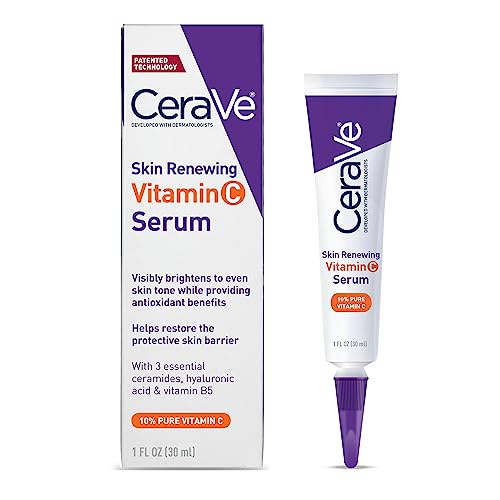
CeraVe Vitamin C Serum with Hyaluronic Acid
This product is a cream containing 10% L-Ascorbic Acid with Hyaluronic Acid. It has received thousands of user ratings and scores highly. There seems to be a lot of love for CeraVe products from those with acne prone skin.
Users say things like:
- their skin looks brighter and better
- they have seen a reduction in dark spots
- they see improvement in lines on their faces
CeraVe Vitamin C Serum
- ANTIOXIDANT BENEFITS Formulated with 10 percent lascorbic acid the purest form of vitamin C to help ighten the complexion and promote more even skin tone. Protective packaging helps prevent oxidation and maintain product performance.
- HYDRATING SERUM Formulated with Hyaluronic Acid to help improve skin tone texture and hydration for a healthy looking radiant complexion.
Low-Price Range
Under €20
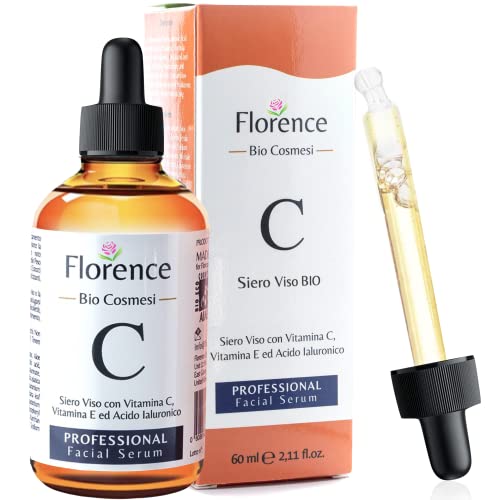
Florence Vitamin C Serum with Hyaluronic Acid and Vitamin E
This product is a serum containing Sodium Ascorbyl Phosphate with Hyaluronic Acid and Vitamin E. It also gets thousands of ratings and a very good score.
Some of the user feedback includes:
- that the product has a pleasant citrus smell and absorbs easily into the skin
- noticing an improvement in skin tone in a short period of time
- seeing dark spots fade
- attributing using the product to having healthy, glowing skin
Vitamin C and Hyaluronic Acid Serum
- Vitamin C supports collagen production, blended with Botanical Hyaluronic Acid, Vitamin E face oil & 20+ ingredients in this advanced formula designed to target the most common signs of aging including brightness, firmness, fine lines, frown lines, wrinkles, acne scars,dark spots & sun spots.
- This product has thousands of reviews from customers and is made with the highest quality ingredients that will brighten, smooth, and moisturise your complexion while repairing sun damage and evening out skin tone. They also naturally lift and firm your skin and fight dryness, dullness, tightness, loss of firmness.
.
How to use topical Vitamin C
Many topical Vitamin C products are serums, coming in the form of liquid with a dropper contained in the bottle lid. You would massage a couple of drops into your skin and, after it has dried, apply your moisturiser. The morning is a good time to apply Vitamin C as it protects against sun damage. You should also be applying a sun block each day.
We suggest applying the Vitamin C to all areas exposed to the sun, including your neck, upper chest and hands.
Like any new product that you use, it is wise to perform a patch test and wait 48 hours before you begin to use it, just in case you have an allergic reaction to one of the ingredients. Vitamin C can be irritating for the skin so keep an eye out for any redness in the initial stages of using it.
Conclusion
We think incorporating Vitamin C into your daily skin care routine is a no-brainer. It is scientifically proven to help rebuild collagen and fade dark spots. And it is not expensive – the Florence product above is very affordable and gets incredibly good reviews on Amazon.
For the Seeoran team, daily Vitamin C use is part of the holy grail of maintaining youthful skin, alongside Tretinoin and sunblock. The main thing to remember with your skincare routine is that consistent application over a long period of time is what generates results.
What are your experiences with Vitamin C? Have you tried it? Would you consider trying it? We love to hear your experiences!